Boutique Hotel Industry Overview: 2026 Market Analysis & Trends
In the shifting topography of global hospitality, the boutique sector has transitioned from a niche architectural rebellion into a $100 billion-plus economic powerhouse. As we navigate 2026, the industry is defined by a paradoxical “Scale of Intimacy,” a movement where major global conglomerates attempt to simulate the agility of independent stays while independent owners increasingly adopt corporate-level data rigor. This duality has rendered the traditional definition of a boutique hotel (typically 10 to 100 rooms with a distinct personality) insufficient for professional analysis.
The modern sector is currently grappling with “Aesthetic Convergence,” where the once-unique visual cues of boutique design reclaimed wood, exposed brick, and mid-century modern furniture have been commodified by mass-market select-service brands. Consequently, “Boutique” is no longer a visual category; it is an operational philosophy centered on “Contextual Intelligence.” This involves a property’s ability to act as a porous membrane between the guest and the local geography, moving beyond “Sustainability” toward “Regenerative Hospitality,” where the hotel actively improves the biological and social systems of its site.
This article serves as a definitive pillar for understanding the systemic layers of the sector. We will examine the economic drivers currently pushing the market toward a projected $136 billion by 2030, the risk landscapes of “Visual Obsolescence,” and the governance models required to maintain an authentic “Soul” in an era of private equity consolidation.
Boutique Hotel Industry Overview
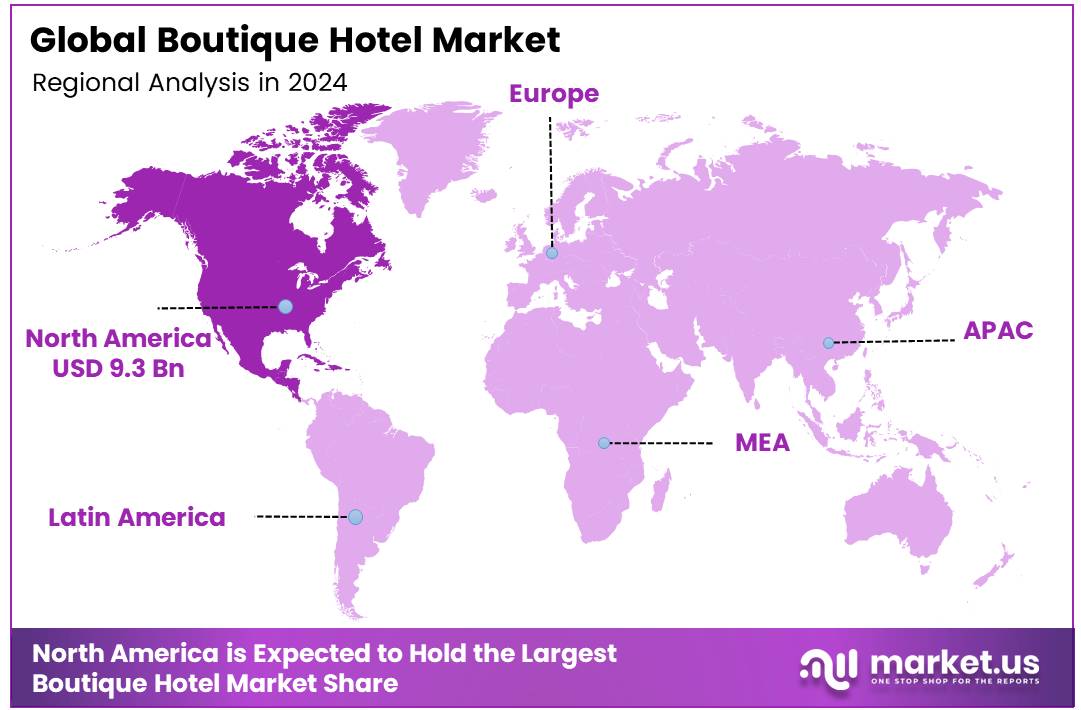
To engage with a boutique hotel industry overview in 2026 is to witness a sector in “Quiet Recalibration.” Historically defined by the independent spirit of pioneers like Ian Schrager and Bill Kimpton, the industry now operates within a complex ecosystem where the “Independent Signal” is frequently owned by institutional capital. This has created a “Definitions Gap.” A common misunderstanding among casual observers is that boutique status is primarily an aesthetic achievement. In reality, industry professionals evaluate properties through “Narrative Cohesion,n” the degree to which every touchpoint, from the acoustic damping in the hallways to the provenance of the lobby’s scent, reinforces a singular creative thesis.
The oversimplification risk in this sector is the “Scale Trap.” There is a pervasive belief that a 200-room property cannot be boutique. However, as “Vertical Boutique” concepts rise in dense urban centers like Tokyo and New York, professionals are shifting focus to “Social Density” rather than room count. A hotel is boutique if it maintains a “Human-to-Hardware Ratio” that allows for unscripted, intuitive service. The industry is currently bifurcating into “Authentic Independents” and “Lifestyle Brands.” The latter are corporate-backed simulations that use boutique aesthetics as a wrapper for standardized global supply chains, a distinction critical for investors and travelers alike.
Furthermore, the 2026 overview highlights a significant shift in “Revenue Architecture.” Boutique stays are no longer just selling rooms; they are selling “Atmospheric Access.” High-performing properties now derive up to 40% of their revenue from ancillary streams, ms curated F&B, local artisan retail, and wellness “memberships” that integrate the hotel into the daily life of the local community. This integration serves as a hedge against the volatility of international tourism, creating a more resilient, community-anchored business model.
Deep Contextual Background: The Three Waves of Boutique Evolution
The sector did not emerge as a trend, but as a systemic reaction to the “Sterile Consistency” of mid-century corporate lodging.
Wave 1: The Social Theater (1984–1995)
Birthed in New York and London, this era was defined by “Exclusivity as Currency.” The lobby became a stage, and design was used as a barrier to entry. The focus was on “Who is in the Room?” rather than the quality of the stay itself.
Wave 2: The Narrative Turn (1996–2015)
Led by the “Industrial Chic” movement, this phase prioritized the adaptive reuse of forgotten structures. The value proposition shifted to “History as Drama.” This period saw the rise of global collections (e.g., Design Hotels) that provided independent properties with the distribution power to compete with the Hiltons of the world.
Wave 3: The Restorative Phase (2016–Present)
The current era is defined by “Material Truth” and “Cognitive Recovery.” In a world of digital saturation, the boutique hotel is now a sanctuary of “Visual Silence.” The focus is on science-backed wellness, biophilic design, and a move toward “Net-Positive” environmental impact.
Conceptual Frameworks: The Boutique Vitality Models
To analyze the health of a boutique asset, we employ four primary mental models.
1. The “Sensory Terroir” Framework
This model assesses how effectively a hotel translates its physical environment into a sensory experience. A property in the High Desert should smell, sound, and fedifferent fromhan one in a Mediterranean port. Failure here leads to “Generic Luxury,” which is the antithesis of the boutique value proposition.
2. The “Frictionless Aesthetic” Ratio
This framework measures the tension between “Visual Purity” and “User Utility.”
-
Low Ratio: A room that looks like a gallery but lacks intuitive lighting or accessible power outlets.
-
High Ratio: A room where technology is “Invisible” (e.g., bone-conduction speakers in walls) and furniture serves multiple functional purposes without breaking the visual line.
3. The “Temporal Resilience” Matrix
Does the design have a “Shelf Life”? This matrix assesses whether a property’s aesthetic is “Trend-Reactive” or “Trend-Transcendental.” A property built on 2024’s “maximalist” trend may feel dated by 2027, whereas one built on “Proportional Harmony” remains relevant for decades.
4. The “Social Porosity” Index
This model measures the hotel’s integration with its neighborhood. A high index means the hotel is a “third space” for locals, which stabilizes revenue during off-peak tourist seasons.
Key Categories and Trade-offs
The 2026 boutique market is segmented into several dominant archetypes, each with a specific trade-off.
| Category | Primary Value Proposition | Typical Trade-off | Ideal Scenario |
| Adaptive Reuse | “History as Drama”: Uniqueness | Quirky layouts; High maintenance | Urban explorers |
| Biophilic Retreat | Wellness; Nature integration | Higher climate/insect friction | Burned-out executives |
| Lifestyle Brand | Boutique “feel” with points/loyalty | “Simulation” of authenticity | Business travelers |
| Museum-Centric | Art immersion; Intellectualism | Can feel “Cold” or precious | Cultural travelers |
| Regenerative Farm-Stay | Circularity; Ethical dining | Limited luxury amenities | Conscious travelers |
| Minimalist Tech-Hub | Efficiency; Mental clarity | Lack of “Warmth” | Modern nomads |
Decision Logic: The “Atmospheric Intent” Filter
The choice to invest in or stay in a specific category should be driven by “Cognitive Goals.” If the goal is “Social Reconnection,” a Social Hub is logical. If the goal is “Introspective Recovery,” a Biophilic Retreat is required. A “Frequency Mismatch” between the guest’s mental state and the building’s intent is the primary cause of poor reviews.
Detailed Real-World Scenarios Boutique Hotel Industry Overview
The “Acoustic Failure” in a Glass-and-Steel Icon
A new-build design icon in Los Angeles features floor-to-ceiling glass and hard marble floors.
-
The Failure: High “Reverb Time” in the lobby makes private conversation impossible. Rooms suffer from “Vibration Transfer” from the nearby highway.
-
The Result: The property is beautiful in photographs but “Acoustically Hostile” in reality.
-
Conclusion: Boutique excellence must include “Acoustic Engineering” as a core design pillar.
The “Service Recovery” through Adaptive Reuse
A hotel in a repurposed 1920s bank in Philadelphia suffers a localized plumbing issue.
-
The Performance: Because the design includes “Modular Access Panels” hidden by art, the maintenance team repairs the issue in two hours without opening a single wall.
-
Conclusion: Great design includes “Operational Foresight” anticipating the failures of an aging structure’s “Guts.”
Planning, Cost, and Resource Dynamics
Operating a boutique asset involves a “Visual Premium” that affects the entire P&L statement. Payroll and fixed property costs are the two dominant forces.
2026 Operating Projections (50-Room High-End Boutique)
| Expense Category | Monthly Cost (Est.) | % of Revenue (at 60% Occupancy) |
| Base Payroll (15 FTEs) | $61,667 | 46% |
| Fixed Property Costs | $45,500 | 34% |
| F&B/Spa Variable Costs | $14,885 | 11% |
| Tech/Software (PMS/CRM) | $1,200 | 1% |
| Maintenance/Security | $3,800 | 3% |
| Total Monthly Budget | $134,000 | 100% |
Resource Dynamics
-
The “OTA Tax”: Online Travel Agencies (OTAs) charge between 15% and 30% commission. For a boutique hotel with tight margins, reducing this “tax” through “Direct Booking Incentives” is the single most important financial lever.
-
Staffing Inflation: In 2026, the cost of “Emotional Labor” (skilled, empathetic staff) is rising faster than room rates. This creates “Margin Compression” that requires aggressive ancillary revenue growth.
Tools, Strategies, and Support Systems
To survive as an independent in 2026, operators use a “Tech-Human Hybrid” model.
-
Invisible Tech Stack: Using AI-enabled Property Management Systems (PMS) that handle the “boring” tasks (check-in, billing) so staff can focus on “High-Value Interaction.”
-
Schema Markup & AEO: Moving beyond traditional SEO to “Answer Engine Optimization,” ensuring that AI assistants can accurately describe the hotel’s unique features.
-
Metasearch Maturity: Using intent-based bidding on platforms like Google Hotels to capture travelers before they reach the OTAs.
-
Material Passports: Documentation of every material used in a renovation to prove sustainability credentials to increasingly skeptical Gen Z and Millennial travelers.
-
Dynamic Upselling: Using digital tools to offer “Micro-Upgrades” (e.g., a specific workspace setup or a recovery kit) based on guest data.
-
Sentiment Analysis Tools: Using AI to track review trends across 20+ platforms to identify “Service Drift” before it impacts the bottom line.
Risk Landscape and Failure Modes
The boutique sector is a “High-Beta” environment; the rewards for success are massive, but the failure modes are compounding.
-
Aesthetic Obsolescence: The risk that a “cutting-edge” design will look like a “period-piece” in three years.
-
“Vibe-Washing”: When a corporate chain buys a boutique label and strips the “Authentic Soul” in favor of “Scalable Style,” leading to a slow decline in guest loyalty.
-
The “Influencer Dilution” Effect: A property becomes so popular for “Instagrammability” that it drives away the high-value, privacy-seeking guests who actually pay the bills.
-
Operational Fragility: Small teams mean the loss of one key General Manager can cause a “Systemic Service Collapse.”
Governance, Maintenance, and Long-Term Adaptation
To maintain authority, a boutique hotel must implement a “Curatorial Governance” model. This is the “Software” that keeps the “Hardware” relevant.
The Design Custodian Model
A property should appoint a “Design Custodian,” often the original architect or a senior manager who has “Veto Power” over any changes to the visual or social environment. This prevents the “Slow Decay of Detail” where mismatched furniture or generic signage slowly erodes the brand.
Layered Maintenance Checklist:
-
[ ] Daily: “Olfactory and Acoustic Leveling” Checking that the scent and sound volumes are tuned to the time of day.
-
[ ] Monthly: “Tactile Audit” Checking all high-touch surfaces (leather, stone, wood) for “Noble Wear” vs. “Ugly Damage.”
-
[ ] Quarterly: “Local Content Review” Ensuring that the local artists, snacks, and products featured are still relevant to the neighborhood narrative.
Measurement, Tracking, and Evaluation
Traditional metrics like Occupancy and ADR (Average Daily Rate) are “Lagging Indicators.” Boutique success requires “Leading Indicators.”
-
Net Promoter Score (NPS) / Sentiment Score: A quantitative measure of qualitative joy.
-
Direct Booking Ratio: The ultimate measure of “Brand Magnetism.” If this ratio is increasing, your marketing is effective.
-
GOPPAR (Gross Operating Profit Per Available Room): The true measure of financial health, as it accounts for the high costs of boutique service.
-
Non-Guest Revenue: The percentage of revenue from people not staying overnight. This measures “Social Capital” and neighborhood integration.
Common Misconceptions and Industry Myths
-
Myth: “Boutique hotels are only for young people.”
-
Correction: Affluent “Silver Nomads” (60+) are the fastest-growing segment in the luxury boutique space, seeking “Intimate Reliability” over corporate grandiosity.
-
-
Myth: “Boutique means expensive.”
-
Correction: The “Budget Boutique” or “Poshtel” segment is booming, proving that “Design Thinking” can be applied to lower price points.
-
-
Myth: “Technology ruins the boutique vibe.”
-
Correction: Bad technology ruins the vibe. “Invisible Technology” (automated climate, smart lighting) actually enhances the feeling of a personalized home.
-
Ethical and Contextual Considerations
The 2026 boutique hotel cannot ignore its “Shadow Impact.”
-
Gentrification vs. Integration: Properties must prove they are “Asset-Positive” for the neighborhood, providing jobs and public spaces rather than acting as a tourist fortress.
-
Labor Ethics: As the industry faces talent shortages, the “Human-Centric Leadership” model is the only way to retain the high-level talent required for boutique service.
-
Regenerative Sourcing: Moving from “Local-ish” to “Hyper-Local,” where every item in the mini-bar supports a circular economy within 50 miles of the property.
Conclusion
The boutique hotel industry in 2026 has entered its era of “Intellectual Maturity.” The novelty of unique design has been replaced by a demand for “Contextual Sincerity.” For owners and operators, the challenge is no longer just about creating a “beautiful space,” but about managing a “Complex Living System” that balances high-tech efficiency with high-touch human empathy.
The future of the sector belongs to the Contextualists,s” those who can listen to the spirit of a place and translate it into a physical environment that feels both surprising and inevitable. As travelers continue to seek “Meaning over Luxury,” the boutique hotel will remain the laboratory where the future of human hospitality is written. Success will not be measured by the number of rooms, but by the depth of the connection the hotel facilitates between the traveler and the world.